


Last Saturday, a young collector in Zurich nearly traded away a PSA 10 Graded card for a common Pikachu simply because the Pikachu looked "happier." If you have felt that sudden jolt of panic while watching your kid flip through their binder, you aren't alone. Explaining pokemon card rarities to a child feels like teaching a second language, especially with the 12 unique rarity symbols found in 2026 sets like Prismatic Evolutions.
We agree that the shift to the Scarlet & Violet era brought a confusing wave of double gold stars and silver borders that baffle even veteran collectors. At PokeReaves, your Swiss TCG Shop, we believe rarity should feel like a treasure hunt rather than a math test. This guide promises to give you a simple framework to identify high-value hits quickly using 4 basic visual analogies. You'll learn how to distinguish between Holos and Reverse Holos while teaching your child to value and protect their collection during every Booster Bundle opening.
Key Takeaways
- Decode the "Treasure Map" by using simple analogies like lunchbox snacks to explain the circles, diamonds, and stars found on every card.
- Master the art of explaining pokemon card rarities to a child by teaching them why a shiny background is different from a shiny character.
- Identify the newest 2026 rarity tiers, including the specific "Double Rare" and "Sparkle Star" symbols unique to the Scarlet & Violet era.
- Implement the "No Fingers on the Face" rule to help your child maintain mint condition and protect the value of their growing collection.
- Ensure collection authenticity by sourcing sealed products from a trusted Swiss TCG shop to avoid the common pitfalls of counterfeit cards.
The Pokémon Treasure Map: Understanding Basic Rarity Symbols
Every Pokémon card is a tiny treasure map. Since the Pokémon Trading Card Game history began in 1996, the creators have used a secret code to tell us which cards are special. When you're explaining pokemon card rarities to a child, it's easiest to call these symbols "map icons." These tiny shapes tell the story of how hard a card was to find inside a booster pack. Once a child learns to spot these, they gain a sense of ownership over their collection that goes beyond just looking at the pictures.
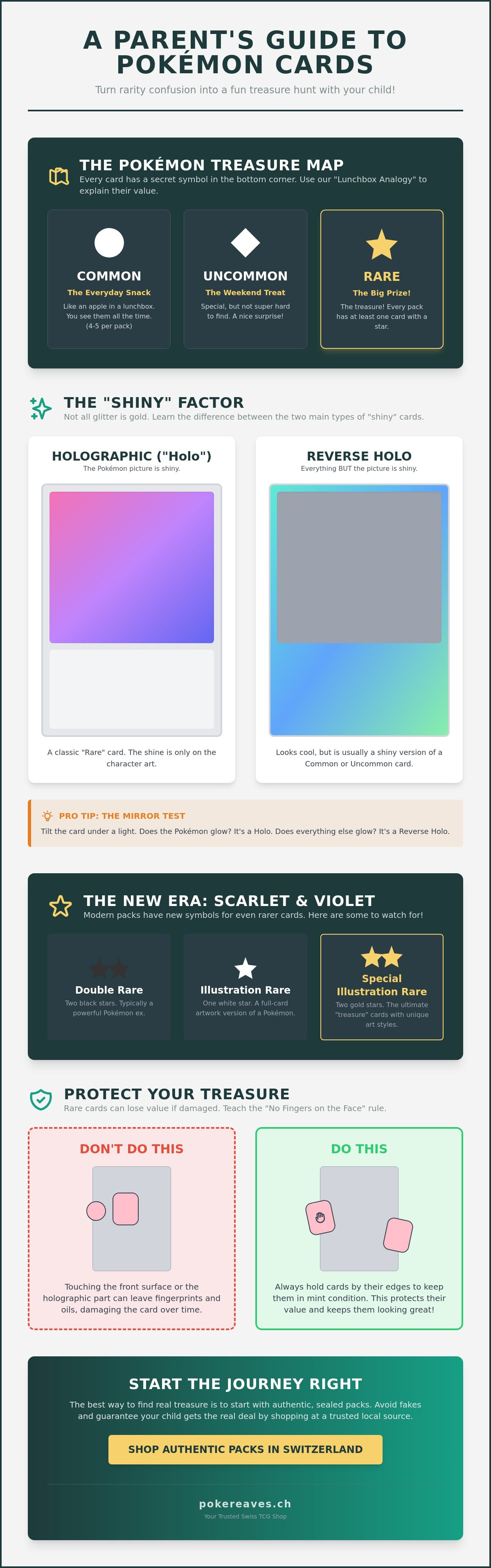
There are three basic shapes that every young collector needs to know. You can explain them using things they see every day:
- The Circle (Common): These are like the everyday snacks in a lunchbox, such as an apple or a juice box. They're great, but you see them all the time. Most packs contain 4 or 5 of these.
- The Diamond (Uncommon): These are a bit more special, like getting a weekend treat or a favorite dessert. They're harder to find than circles but still show up often.
- The Star (Rare): This is the "Big Prize." In the world of Pokémon, the star represents a treasure. Every single booster pack is guaranteed to have at least one of these, making it the highlight of every opening session.
The Pocket Money Analogy
If the lunchbox analogy doesn't click, try talking about pocket money. Explaining pokemon card rarities to a child works well when you compare cards to value. A Common circle card is like a 10-rappen coin; it's useful, but it takes a lot of them to get something big. A Rare star card is like a 20-franc note. This helps them understand why trading one "Star" for one "Circle" isn't a fair deal, even if the circle card features their favorite Pokémon. More stars or fancy shapes always mean a bigger treasure find for their binder.
Where to Find the Symbols
To find these icons, have your child look at the very bottom corner of the card. In 2026 sets like Prismatic Evolutions, these symbols are usually tucked next to the collector number, such as 045/165. They might be on the bottom-left or bottom-right depending on the specific set. It's also helpful to point out that symbols can change color. While most are black, some special "Ultra Rare" cards feature white or gold symbols to show they're even more valuable than a standard star. Identifying these small details turns a simple hobby into a focused skill.
Holos, Reverse Holos, and the "Shiny" Factor
Shiny cards are the crown jewels for any young collector. However, when you're explaining pokemon card rarities to a child, you must clarify that not all glitter is gold. Since the release of the Scarlet & Violet base set in March 2023, The Pokémon Company changed how packs are built. Now, every standard booster pack contains at least two "shiny" cards. This means your child will find something that sparkles in 100% of their packs, but some sparkles are much more common than others.
A Holographic (Holo) card is the traditional version where only the picture of the Pokémon has a metallic, rainbow finish. A Reverse Holo is the exact opposite. On these cards, the entire face of the card shines while the Pokémon portrait remains flat and non-shiny. While these look impressive, they're usually just shiny versions of Common or Uncommon cards. If the shine looks dull or follows a suspicious vertical pattern, it's a good idea to consult the official guide to spotting fakes to ensure the collection stays authentic.
The Mirror Test for Kids
Teaching a child to distinguish these takes a bit of practice. Have them hold a card under a desk lamp and tilt it slowly. If the Pokémon "glows" and changes color, it's a classic Holo Rare. If the text and the borders "glow" instead, it's a Reverse Holo. This simple test helps them categorize their binder without getting overwhelmed by technical terms. When explaining pokemon card rarities to a child, remind them that the most special cards, like those found in Prismatic Evolutions Booster Bundles, often have shine across the entire surface plus a bumpy, 3D texture.
Holo vs. Reverse Holo Comparison
Use this simple breakdown to help your child organize their latest pulls. It's an easy way to show them why some "shinies" are for trading and others are for keeping safe in sleeves.
| Where is the shine? | What is it called? | How rare is it? |
|---|---|---|
| Only the Pokémon picture | Holographic (Holo) | Standard Rare |
| Everywhere EXCEPT the picture | Reverse Holo | Common/Uncommon Variant |
| The entire card + bumpy texture | Full Art / Ultra Rare | Very Rare |
Full Art cards are the ultimate prizes. These cards don't just shine; they have etched patterns you can feel with your fingernail. If your child pulls one of these, it's time to reach for a protective sleeve immediately. These are the "treasure" cards that make the hobby so exciting for families.
The New Era: Explaining Scarlet & Violet Rarities Simply
Since the Scarlet & Violet era began on March 31, 2023, the way we look at cards has changed. The old system of circles and diamonds is still there, but the "hits" now use a specialized star system. Explaining pokemon card rarities to a child is easier when you focus on the color and number of these stars. Instead of just one black star, your child might find two or even three. These symbols act as a quick rank for how powerful or beautiful a card is. For a deeper look at how these compare to older sets, this Pokémon TCG rarity guide provides a clear breakdown of the transition.
The first big upgrade to look for is the "Double Rare" symbol. These are marked by two solid black stars in the corner. You'll usually see these on Pokémon-ex cards, which are the powerhouses of the game. They have high health points and strong attacks. When your child pulls a card with two black stars, they've found a "game-winner" for their deck. These cards are shiny but usually have a smooth surface. It's the perfect starting point for building a competitive collection with products like the Scarlet & Violet—151 Elite Trainer Box.
Illustration Rares: The Story Cards
Some cards are more than just game pieces; they're tiny paintings. Illustration Rares show a Pokémon in its natural home, like a Charmander sleeping in a kitchen. Teach your child to look for one gold star, which signals a "Special Illustration Rare." This is where the physical "feel" matters most. These cards have a unique, bumpy texture that feels like a fingerprint on the surface. If the card is smooth, it's likely a standard version. If it has those tiny ridges you can feel with a fingernail, they've found a masterpiece. Explaining pokemon card rarities to a child becomes a sensory experience when they learn to "feel" for the rare ones.
The Gold Card Jackpot
The ultimate prize in any modern pack is the "Hyper Rare." These are the only cards that feature three gold stars. They're easy to spot because the entire card, including the borders and the background, is a shimmering, brilliant gold. Tell your child these are "Trophy Cards." They're the rarest pulls in any set and should go straight into a protective sleeve. Because of their gold borders and intense sparkle, they stand out immediately in any binder. Finding one of these is like finding a gold nugget in a stream; it's the highlight of the entire treasure hunt.
Teaching Responsibility: How to Protect Rare "Treasure" Cards
Explaining pokemon card rarities to a child is only half the battle. Once they identify a rare find, they must learn how to keep it safe. In the collector world, we call this "mint condition." A card that looks brand new is always more valuable than one with bent corners or scratches. For example, a rare card from the 1999 Base Set can lose over 90% of its market value if it has just a few surface scuffs. Teaching your child the "No Fingers on the Face" rule is a great start. Oily smudges from skin can actually damage the delicate holographic foil over time, so it's best to handle cards only by their edges.
Every rare star card deserves a "Penny Sleeve" immediately after opening. These thin plastic pockets act as a first line of defense against dust. If your child pulls a particularly high-value card, like a Special Illustration Rare, you might consider professional casing. While we don't provide grading services ourselves, PSA graded cards Switzerland represent the gold standard for protecting the ultimate treasures in a collection. These hard plastic slabs ensure the card stays in perfect shape for decades.
Sleeves vs. Toploaders
Think of card protection in layers. Penny sleeves are like "clothes" for cards; they keep them clean and dry. Every card with a star symbol should wear one. For those extra special 3-star gold cards, you need "armor." This is where toploaders come in. These rigid plastic holders prevent the card from bending or getting crushed in a backpack. Encourage your child to put their "big hits" in armor as soon as they leave the pack to avoid any accidental creases during playtime.
The Trading Rule
Trading is a huge part of the fun, but it's where most mistakes happen. Establish a firm "Check with Mom or Dad" rule for any card with a star symbol. Without this, a child might trade a valuable "Double Rare" for a common Pikachu just because they like the character. To keep things organized, use a classeur pokemon. This binder helps your child display their collection safely while keeping their trade cards separate from their permanent treasures. It makes explaining pokemon card rarities to a child much easier when they can see the symbols lined up in clear pockets.
Responsibility builds pride. When a child sees their collection neatly organized and protected, they treat it with more respect. It transforms a messy pile of cards into a curated gallery they can be proud of. If you are looking to start their protection journey with the right gear, browse our latest sealed products and accessories at PokeReaves.
Starting the Journey: Finding Authentic Packs in Switzerland
Switzerland is a unique place for collectors because we often see both English and French language packs on the same retail shelves. When you're explaining pokemon card rarities to a child, it's vital to mention that the language doesn't change the rarity symbols. A gold star in a French pack is just as special as one in an English pack. However, most serious collectors in the Swiss community prefer English cards for long-term value and ease of trading. Choosing a trusted TCG shop Schweiz ensures you're getting genuine, factory-sealed products rather than tampered packs often found at flea markets or unverified online marketplaces.
If you're looking for the perfect entry point, the Scarlet & Violet—151 Elite Trainer Box is an excellent choice. It includes 9 booster packs, 45 energy cards, and a player's guide that helps with explaining pokemon card rarities to a child. This specific set features the original 151 Pokémon from the Kanto region. It's a fantastic bonding experience for parents who remember the original 1996 release and want to share that nostalgia with their kids while teaching them about the modern 2026 rarity tiers.
Spotting Fake Cards at School
Playground trades are where fakes usually appear. Teach your child that real cards have a "snappy" feel; they shouldn't feel like flimsy, oily paper. If a card has a "weird font" that looks different from their other cards, or a vertical rainbow shine that doesn't change when tilted, it's likely a counterfeit. Real holographic cards from the 2026 era have sophisticated, diagonal light patterns. For guaranteed peace of mind, buying a full pokemon booster box is the most reliable way to ensure every card in the collection is 100% authentic and factory-sealed.
The PokeReaves Family Promise
PokeReaves is a family-run business that understands the excitement of opening a new pack. We're proud to offer a curated selection of sealed products that meet the high standards of the Swiss collector community. We provide fast, secure shipping across Switzerland so your new "treasure" arrives in perfect condition. If you're ever unsure which set is right for your child's age or interest level, please get in touch with us via our orders email. We're always happy to provide personalized advice to help you build a collection that your family can enjoy for years to come.
Build Your Family's Ultimate Pokémon Legacy
By mastering the treasure map symbols and the "No Fingers on the Face" rule, you have turned a confusing binder into a structured collection. Explaining pokemon card rarities to a child builds a foundation of respect for their cards while creating a shared hobby you can both enjoy. You now know how to distinguish a common Holo from a textured Special Illustration Rare and why authentic sourcing in the Swiss market is essential for long-term value. These simple lessons ensure that your child's favorite hobby remains both fun and rewarding as they grow.
At PokeReaves, we are a Swiss-based family business dedicated to providing an expertly curated selection of authentic sealed products. We take pride in our offerings and provide nationwide shipping across Switzerland with free delivery on all orders over 350 CHF. This ensures your next big hit arrives safely and quickly. Explore our collection of kid-friendly Pokémon sets at PokeReaves and start building a legendary binder together today. We look forward to helping your family find its next great treasure.
Frequently Asked Questions
How can I tell if a Pokémon card is rare just by looking at it?
Look for the star symbol in the bottom corner of the card. A single black star indicates a standard rare, while double or triple stars represent ultra-rare or hyper-rare pulls. Texture is another major indicator; if the card has a bumpy surface you can feel with your thumb, it's a high-value "hit" from a modern set.
What is the difference between a Holo and a Reverse Holo card?
A Holo card has a shiny, metallic picture of the Pokémon, while a Reverse Holo has a shiny background and border with a flat, non-shiny picture. Every booster pack since the March 31, 2023, Scarlet & Violet release contains at least two Reverse Holos. While they look impressive to kids, Reverse Holos are usually just shiny versions of common or uncommon cards.
Are the gold Pokémon cards real and how rare are they?
Official gold cards are real "Hyper Rare" treasures and feature three gold stars. These cards are the rarest in any given set, often appearing in roughly 2% of booster packs based on community pull rate data. Be wary of solid gold plastic cards found on discount websites; those are 100% counterfeit and have no place in a real collection.
Is it better to buy English or French Pokémon cards in Switzerland?
English cards are generally the better choice for long-term value and ease of trading. While French packs are common in Swiss retail shops, the international market for English cards is much larger. Most enthusiasts at PokeReaves prefer English sets because it's easier to find price data and trade partners for these cards within the global community.
Should I let my child trade their rare cards with friends?
You should only allow trades after you have reviewed the rarity symbols together to ensure the trade is fair. Explaining pokemon card rarities to a child helps them understand that a card with two silver stars is significantly more valuable than a card with a black circle. Establish a "parental approval" rule for any card with a star to prevent them from trading away a potential trophy card by mistake.
What does the "ex" mean next to a Pokémon’s name?
The "ex" label stands for "extra" power and marks a Pokémon with higher HP and more devastating attacks. These cards are game-changers in matches and are almost always "Double Rare" or higher. Since 2023, "ex" cards have become the standard for powerful pulls, and they feature a unique foil layer that covers the entire card face.
How do I know if my child’s Pokémon card is a fake?
Check the back of the card for clear, multi-toned blue swirls and the front for correct spelling and font. Fake cards often have a vertical rainbow shine that stays still when you tilt the card, whereas real cards have diagonal or etched light patterns. If a card feels like thin, flimsy paper or has a strange oily texture, it didn't come from an official booster pack.
What is the best Pokémon card set for a child to start with in 2026?
The Scarlet & Violet—151 Elite Trainer Box is the premier choice for new collectors because it features the original 151 Pokémon. This makes explaining pokemon card rarities to a child much easier for parents who grew up with the 1990s games. For those who want the newest 2026 glitter, Prismatic Evolutions Booster Bundles provide a high frequency of shiny cards that keep young collectors excited.


